The Real Risk Isn’t Building an AI Avatar. It’s Hiring the Wrong Team.
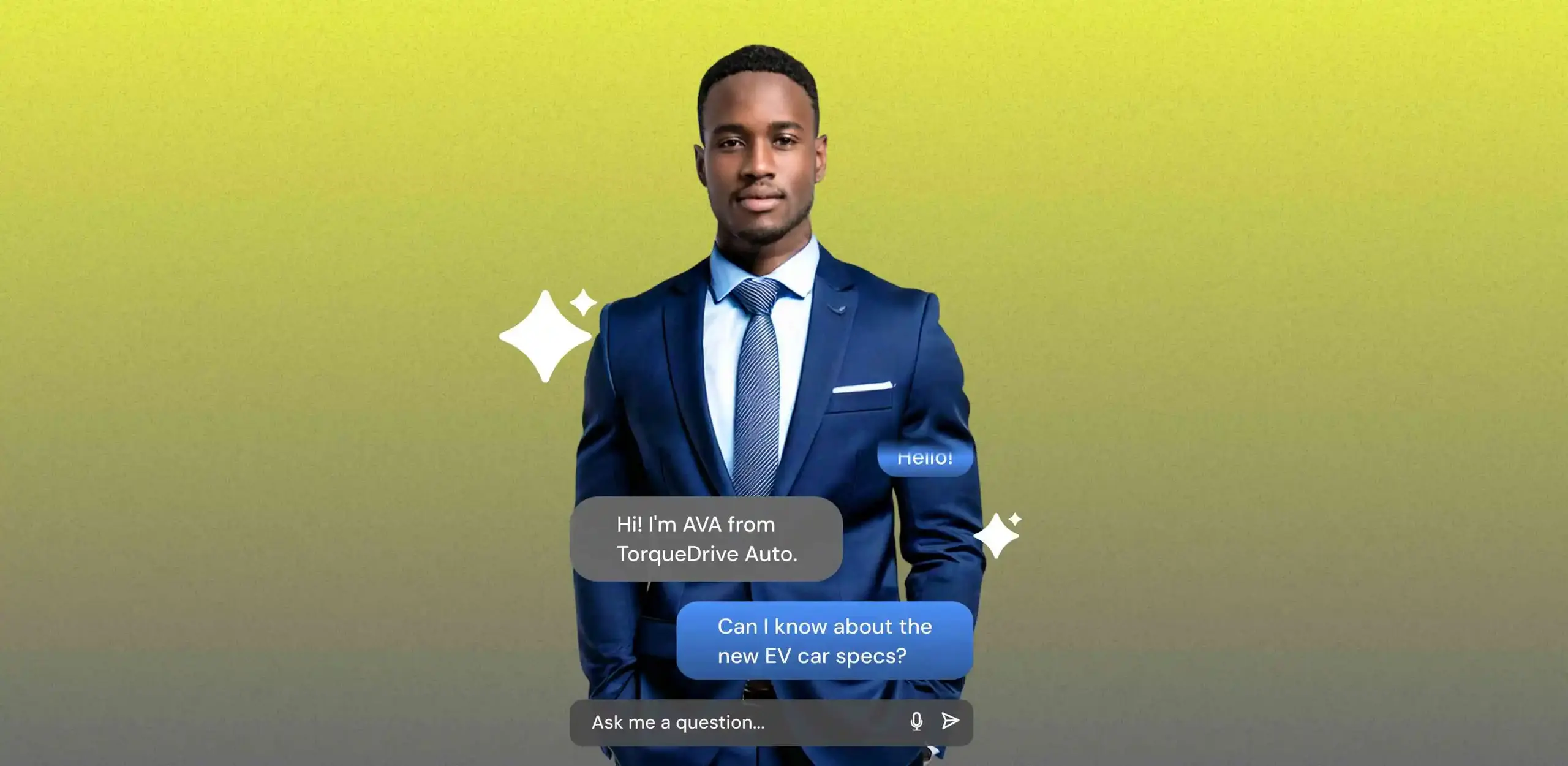
AI avatars have moved from impressive demos to serious business interfaces. Enterprises now use digital humans and conversational AI avatars to guide buyers, support customers, train employees, assist patients, and explain complex products. Hire the wrong AI avatar development company, though, and a promising idea turns into a slow, expensive experiment that never leaves pilot mode.
A good avatar isn’t just a talking face. It needs accurate answers, natural voice, reliable lip sync, secure data handling, real-time communication, system integrations, analytics, and clear escalation rules when it doesn’t know something. This guide is written for the hiring decision itself, how to evaluate vendors, what to ask, what to watch for, and how to avoid paying for a polished demo that can’t survive contact with real users.
Why the Wrong AI Avatar Partner Costs More Than the Project
Most AI avatar projects fail for the same reason: the vendor starts with appearance before understanding the business journey. The avatar looks great in a sales demo, then falls apart the moment a user asks an unexpected question, speaks with an accent the model wasn’t tuned for, or expects the avatar to actually complete a task instead of just talking about it.
This risk isn’t theoretical, and adoption is accelerating fast enough that vendor quality is becoming the deciding factor. Stanford’s 2025 AI Index reported that 78% of organizations used AI in 2024, up from 55% the year before, with private investment in generative AI reaching $33.9 billion (Stanford HAI, 2025 AI Index Report). McKinsey’s 2025 State of AI survey similarly found most organizations experimenting with AI agents are still working through implementation, not results (McKinsey, The State of AI in 2025). As adoption climbs, so does the number of underqualified vendors chasing the demand, which raises the bar for how carefully buyers need to screen them.
A weak vendor creates hidden costs that don’t show up until months in: rework, inaccurate responses, brittle integrations, compliance exposure, laggy latency, runaway model-usage bills, and a user experience nobody trusts. A strong AI avatar development company helps you define the right MVP, validate the use case before writing code, control risk from day one, and keep improving the avatar after launch, not just ship it and disappear.
Before You Hire: Define the Use Case, User Journey, and MVP Scope
Before you talk to a single vendor, get specific about what the avatar actually needs to do. “We need an AI avatar” gets you vague, interchangeable proposals. “We need a website avatar that qualifies enterprise leads, explains our integrations, answers product questions, and routes high-intent prospects to sales” gives a vendor a real problem to solve and gives you a way to tell a good proposal from a generic one.
Work through these before your first vendor call:
- Who is the primary user? Buyer, patient, learner, employee, event attendee, or support customer: each implies a different tone, risk tolerance, and integration need.
- What task should the avatar complete in version one? Not everything it could eventually do; the one thing that proves value.
- Which systems must it connect to? CRM, LMS, helpdesk, HRMS, ERP, website, or mobile app.
- What should it never answer without human escalation? Pricing exceptions, medical specifics, legal questions, account changes- define the boundary up front.
- What metric proves success? Qualified leads, reduced support load, training completion, appointment bookings, or a measurable lift in satisfaction.
This clarity also tells you whether you need a custom build, an off-the-shelf avatar tool, or a hybrid of both. If the avatar has to connect to business workflows, private knowledge, and real-time interaction, you’re in custom software development territory, not surface-level avatar generation.
What a Serious AI Avatar Development Company Should Be Able to Prove
A capable vendor should demonstrate strength across five layers: AI reasoning, voice experience, visual avatar quality, integration depth, and governance. Don’t accept generic claims on any of these; ask for evidence.
- AI reasoning and knowledge grounding. The team should understand large language models, prompt design, generative AI development, Retrieval-Augmented Generation (RAG), embeddings, vector databases, response evaluation, and guardrails. If the avatar is meant to answer from your business content, the vendor needs a concrete plan for connecting approved documents, FAQs, product data, and policies to the conversation layer, not a vague promise that “the AI will handle it.”
- Voice AI experience. Speech-to-text, text-to-speech, accent handling, interruption support, and latency optimization are what separate an avatar people trust from one they abandon after one bad exchange. For GPT-based builds, this is also where ChatGPT integration expertise matters; the language model has to fit the workflow, not the other way around.
- Avatar rendering and personality. Facial animation, lip sync accuracy, real-time rendering, and brand-appropriate visual style. Photorealism isn’t automatically the right call, the right visual style is the one your specific users trust and understand, which varies a lot between a healthcare intake assistant and a B2B sales avatar.
- Real-time communication. If the avatar needs live audio or video-style interaction, the vendor needs real WebRTC development experience: streaming, session management, browser compatibility, and the connection-quality edge cases that only show up at scale.
- Governance. Who defines what the avatar can and can’t say, how it escalates, and how that gets audited over time.
AI Avatar Vendor Maturity Checklist
Use this to compare shortlisted vendors on more than just their pitch deck. A production-ready vendor should show real strength across all four levels, not just the first one.
- 1. Demo maturity — Can they show a working avatar experience, not just mockups or a highlight reel?
- 2. Product maturity — Can they map user journeys, define MVP scope, and define measurable outcomes before writing a proposal?
- 3. Engineering maturity — Can they explain their approach to LLMs, RAG, voice AI, WebRTC, APIs, and testing in plain language, without dodging specifics?
- 4. Operational maturity — Can they support monitoring, content updates, security reviews, analytics, SLAs, and model upgrades after launch?
Most failed AI avatar projects don’t fail at level 1. They fail at level 4 — the vendor-built version one, then had no plan for what happens after launch.
Questions to Ask Before Hiring AI Avatar Developers
Strategy and scope
- Which use case should we prioritize for the MVP, and why that one first?
- What should explicitly not be in version one?
- How will success be measured after launch?
- Can you map the user journey before proposing features, or do features come first?
Technical
- Which LLMs, speech models, avatar engines, and cloud services do you recommend for this use case specifically?
- Will the avatar use RAG to answer from our approved business knowledge?
- How will you reduce hallucinations and handle questions it’s uncertain about?
- Can it integrate with our CRM, LMS, helpdesk, or custom APIs and have you done this integration before?
- What response latency should we expect for voice interaction?
Ownership and support
- Who owns the source code, prompts, avatar assets, voice assets, data, logs, and analytics?
- What post-launch support and SLA is included, and what costs extra?
- How often can the knowledge base and conversation flows be updated, and by whom?
Need help defining your first AI avatar MVP?
Understand the opportunities, costs, and roadmap before you build.
Red Flags That Show a Vendor Isn’t Production-Ready
The custom LMS development cost becomes clearer when mapped to the business model.
- Corporate training LMS: USD 40,000-150,000+ for onboarding, compliance training, HRMS integration, manager dashboards and reporting.
- EdTech platform: USD 35,000-120,000+ for course selling, instructor tools, subscriptions, assessments, certificates and learner engagement.
- Healthcare training LMS: USD 60,000-180,000+ because secure access, audit trails, certification tracking and compliance evidence matter.
- SaaS LMS platform: USD 100,000-250,000+ for multi-tenancy, tenant billing, white-labelling, organisation dashboards and scalable infrastructure.
The cost to develop LMS platforms for external customers is usually higher than internal training tools because the product must support onboarding, billing, support, analytics, tenant isolation and product-led growth.
Custom Development vs. Off-the-Shelf Avatar Platforms vs. Hybrid
Off-the-shelf avatar platforms work well for simple videos, marketing explainers, and fast prototypes. They’re usually quicker to launch, but often limit brand control, data ownership, integration depth, and workflow flexibility down the line.
Custom AI avatar development makes more sense when the avatar needs to support business-specific journeys, private knowledge, real-time voice, CRM or LMS integration, security controls, and long-term scalability. A hybrid approach is also viable: use existing rendering or voice tools for speed, while building a custom conversation, integration, and governance layer underneath. If personality and brand alignment matter as much as function for your use case, Enfin’s blog on customizable avatar assistants walks through how tone, appearance, and behavior get shaped around a brand.
If the avatar is meant to become part of a product, platform, or enterprise workflow rather than a one-off marketing asset, prioritize a vendor with real AI development services and integration capability over one that only does avatar rendering. For a broader walkthrough of the full build process — from use-case discovery to post-launch optimization — Enfin’s AI Avatar Development Company Guide 2026 covers the end-to-end path in more depth than fits here.
What a Good AI Avatar Development Proposal Should Include
A proposal that just says “we will build an AI avatar” isn’t a proposal; it’s a placeholder. A strong one explains the business goal, user journey, feature scope, architecture, integrations, assumptions, risks, timeline, and support model in enough detail that you could hand it to a second vendor and ask them to critique it. Look for:
- MVP scope, with what’s included and explicitly excluded
- Avatar type, voice experience, and interaction model
- LLM, RAG, knowledge-base, and prompt-governance approach
- Integration plan for CRM, LMS, helpdesk, or custom systems
- Security, privacy, compliance, and escalation assumptions
- A testing plan covering accuracy, latency, usability, and edge cases
- Deployment, monitoring, analytics, and post-launch support terms
- Clear ownership terms for code, content, prompts, avatar assets, and data
Cost, Timeline, and Budget-Control Questions
AI avatar development cost depends entirely on scope. A simple website guide is a fundamentally different project from a real-time, multilingual avatar integrated with CRM, helpdesk, authentication, analytics, and private knowledge sources and vendors who quote both the same way are hiding something.
Rather than asking for a single fixed price up front, ask how the vendor would phase the work. Version one should validate the highest-value workflow with the fewest moving parts; later phases add languages, integrations, and more advanced behavior once you know the core experience works. Useful questions:
- What’s the smallest MVP that can actually prove value?
- Which specific features increase cost the most, and why?
- What are the ongoing monthly model, voice, hosting, and support costs, not just the build cost?
- What can be reused from our existing systems or content instead of rebuilt?
- What happens, contractually, if response quality isn’t acceptable after testing?
Security, Compliance, and AI Risk Controls
AI avatars handle customer questions, employee queries, patient guidance, sales conversations, and sometimes internal knowledge. Security has to be part of the architecture from day one, not a review that happens after the demo is approved.
The NIST AI Risk Management Framework encourages teams to build trustworthiness in throughout design, development, use, and evaluation, not bolt it on afterward. The OWASP Top 10 for LLM Applications specifically flags prompt injection, insecure output handling, sensitive information disclosure, excessive agency, and overreliance as the risks most likely to bite production LLM deployments. A vendor worth hiring should already be building around these, not learning about them when you bring them up.
Practical checks to run before launch:
- Use approved knowledge sources only, with clear content ownership.
- Set explicit rules for refusal, clarification, and human handoff.
- Apply role-based access, logging, and data minimization.
- Test prompt injection, unsafe outputs, sensitive questions, and tool-use boundaries- deliberately, not incidentally.
- Make it unambiguous to users when they’re interacting with AI.
What Proven AI Avatar Work Actually Looks Like
Generic capability claims are easy to write and hard to verify, which is exactly why they shouldn’t be enough on their own. A more useful signal is a named, verifiable project. Enfin’s AI Virtual Avatar work includes deploying concierge and product-specialist avatars for HP at a major tech event in Las Vegas, where the avatars handled real-time attendee questions, walked visitors through HP’s product portfolio, and were built to support the event’s actual customer engagement and product-sales goals rather than just look impressive on a booth screen. The full case study is worth reading as a reference point for what a scoped, production avatar deployment involves end to end, from persona design to real-time NLP integration at live-event scale.
Planning an AI avatar for support, sales, training, or events?
We help you identify the right AI avatar use case and roadmap.
Final Hiring Checklist
Before you sign anything, confirm:
- The vendor understands your business use case and user journey, not just the technology.
- The MVP scope is clear, scoped down, and commercially meaningful.
- They can prove AI, voice, integration, and real-time communication capability with actual work, not just claims.
- The proposal covers security, privacy, testing, analytics, and support — not just build cost.
- Ownership of code, prompts, data, logs, and avatar assets is explicit in the contract.
- They have a real plan for supporting and improving the avatar after launch.
Conclusion
Hiring the right AI avatar development company isn’t about picking the most impressive demo. It’s about choosing a partner that understands your business problem, defines a practical MVP, builds a secure architecture, integrates with your real systems, controls risk, and keeps improving the avatar after launch instead of walking away once it ships.
The strongest projects start narrow: one clear workflow, one user group, one approved knowledge source, one measurable outcome. From there, the avatar can grow into a fuller digital human experience across support, sales, training, healthcare, and enterprise workflows, but only if the foundation was built by a vendor who understood that from the start.
Ready to evaluate your AI avatar idea?
Assess the feasibility of your AI avatar idea.
F. A. Q.
Do you have additional questions?
What should I look for in an AI avatar development company?
AI engineering depth, voice AI experience, avatar rendering quality, WebRTC or real-time communication knowledge, enterprise integration capability, security awareness, and a real post-launch support model.
How do I compare AI avatar development companies?
On proof of prior work, technical depth, MVP planning ability, integration experience, ownership terms, security practices, proposal clarity, and what support looks like after launch.
What should an AI avatar MVP include?
One priority user journey, one approved knowledge source, a clear interaction model, basic analytics, defined escalation rules, and just enough integration to prove real business value.
How much does AI avatar development cost?
It depends on avatar type, voice features, language support, knowledge-base complexity, integrations, hosting, compliance needs, and post-launch support, not just the initial build.
Should I hire AI avatar developers or use an avatar platform?
Use a platform for simple videos or fast prototypes. Hire developers for custom workflows, private data, integrations, real-time conversation, and long-term scalability.
Can AI avatars integrate with ChatGPT?
Yes. AI avatars can integrate with GPT models and other LLMs to support natural conversation, business-specific answers, workflow assistance, and contextual guidance.
Can AI avatars work with WebRTC?
Yes. WebRTC supports browser-based real-time audio, video, and data interaction for avatars used in telemedicine, education, events, and live support.
Who owns the AI avatar data and assets?
It depends entirely on the contract. Clarify source code, prompts, knowledge-base content, avatar assets, voice assets, user data, logs, and analytics ownership before signing anything.
How long does it take to build an AI avatar MVP?
An AI avatar MVP can take a few weeks to a few months, depending on the avatar type, voice features, knowledge base, integrations, and testing needs.
Why do AI avatar projects fail after the demo stage?
They fail when the vendor focuses only on appearance and ignores accuracy, latency, integrations, security, fallback rules, and post-launch improvement.