
Introduction: AI Avatars Are Moving From Novelty to Business Interface
A few years ago, an AI avatar on a website felt like a futuristic add-on. Today, the conversation is different. Customers are already comfortable asking AI for answers, using voice interfaces, and expecting digital channels to respond instantly. What they still miss, especially in complex journeys, is guidance that feels clear, contextual, and human enough to build confidence.
That is where AI digital humans become useful. A well-designed digital human can greet a visitor, explain a product, answer follow-up questions, guide someone through onboarding, support a learner, assist a patient, or qualify a lead before a sales call. It does not replace the human side of the business. It protects human teams from repetitive work while giving users a more helpful first layer of interaction.
The timing is not accidental. The Stanford AI Index 2025 reported that 78% of organisations used AI in 2024, up from 55% the previous year, while global private investment in generative AI reached $33.9 billion. In short, AI is no longer a side experiment. Businesses are now asking a harder question: which AI experiences are actually worth building?
An AI avatar development company helps answer that question by turning an avatar idea into a working product. The work is not just about making a face talk. It involves conversation design, speech, knowledge retrieval, application engineering, security, analytics, integrations, and ongoing improvement. If the experience cannot answer accurately, escalate safely, or connect with real systems, it is only a demo. If it can do those things well, it becomes a serious business interface.
Ready to explore an AI avatar use case?
What Does an AI Avatar Development Company Actually Build?
An AI avatar development company builds interactive digital humans that can speak, listen, respond, and guide users through defined business journeys. These avatars can appear on websites, mobile apps, kiosks, learning platforms, telehealth portals, event screens, sales tools, or internal employee systems.
The visible avatar is only one part of the product. Behind it sits a complete software layer. The language model interprets the user’s intent. A knowledge layer pulls approved business information. The voice layer manages speech input and output. The application layer controls screens, workflows, user sessions, analytics, and integrations. A governance layer defines what the avatar can say, what it should not say, and when it must hand the conversation to a human.
That distinction matters. Many tools can create a polished avatar video. Fewer teams can build a digital human that works inside a real customer journey, connects to business data, handles failure gracefully, and keeps improving after launch. Businesses evaluating AI development services should look for a partner that understands both the AI experience and the product architecture around it.
At its best, an AI avatar becomes a branded front door to your knowledge, workflows, and services. It can explain. It can ask clarifying questions. It can complete small tasks. It can escalate. Most importantly, it can make a digital interaction feel less like a dead-end search box and more like guided assistance.
When Should a Business Hire an AI Avatar Development Company?
Not every workflow needs a visual AI assistant. For simple FAQs, a good search experience or chatbot may be enough. AI digital humans make more sense when the user needs reassurance, voice guidance, step-by-step support, or a more personal explanation before taking action.
A practical way to decide is to look at friction. Where do users pause? Where do they abandon a form? Which questions are repeated every day? Which products need too much explanation before people understand the value? If a human team is constantly answering the same early-stage questions, that may be a strong candidate for an avatar-led experience.
Good starting points include product advisory, customer onboarding, event support, education and training, healthcare engagement, sales qualification, and internal employee assistance. The best projects begin with one narrow journey, not a grand plan to automate every conversation.
For example, a B2B software company might start with an avatar that explains pricing, integrations, and implementation steps to website visitors. A hospital network may begin with an avatar that helps patients understand appointment preparation and basic service information. A university could use a virtual learning coach to answer course navigation questions. Each use case is different, but the rule stays the same: start where guidance improves the journey.
AI Avatar Development Services Businesses Should Expect
Strong AI avatar development services should feel more like product engineering than content production. The team should begin with the business outcome, not the avatar’s hairstyle, accent, or background. Those details matter, but they should come after the use case is clear.
A proper engagement usually includes discovery, user journey mapping, conversation design, AI workflow planning, knowledge-base preparation, avatar and voice experience, application development, integration, testing, deployment, and optimisation. In simple terms, the partner should help you decide what the avatar should do, how it should behave, what information it can trust, where it should appear, and how success will be measured.
Conversation design deserves special attention. A digital human should not sound like a generic chatbot reading a brochure. It needs a tone that matches the brand and the context. A healthcare assistant should be calm and careful. A sales advisor should be clear and useful without sounding pushy. A training coach should encourage the user without pretending to be a human instructor.
Knowledge architecture is just as important. If the avatar answers from outdated documents, half-written FAQs, or unreviewed marketing copy, the experience will fail quickly. A reliable system needs approved sources, update workflows, fallback responses, escalation rules, and analytics that show where users are getting stuck.
Core Technologies Behind AI Digital Humans
AI digital humans work because several technologies are finally mature enough to operate together. None of them is impressive on its own if the user journey is weak. Together, when designed carefully, they can create an experience that feels responsive and practical.
Large Language Models and Reasoning Layer
Large language models help the avatar understand questions, maintain context, generate responses, and decide what to do next. For business use, the model should not be left to improvise freely. It needs clear instructions, approved knowledge sources, response boundaries, and escalation paths. Enfin’s work around large language model development is directly relevant here because the model layer has to fit the business workflow, not the other way around.
Retrieval-Augmented Generation and Business Knowledge
RAG allows the avatar to pull answers from approved content such as product documents, policies, manuals, help articles, event guides, or training material. This reduces the risk of generic responses and makes the system easier to update. When the business changes pricing, policy, or service details, the knowledge layer can change without rebuilding the entire avatar.
Speech, Voice, and Realtime Interaction
Speech-to-text helps the avatar listen. Text-to-speech helps it respond. Realtime audio models are improving the flow between those steps, making voice conversations feel less delayed and more natural. In practice, latency, accent handling, interruptions, and background noise matter as much as the model itself. A beautiful avatar with slow responses will still feel broken.
Avatar Rendering, Lip-Sync, and Visual Style
The avatar’s look should support the use case. Realistic is not always better. Some brands need a friendly illustrated guide. Others need a polished 3D presenter. A healthcare avatar may need calm body language. An event assistant may need more energy. The right visual style is the one users trust, understand, and do not find distracting.
Realtime Communication and Delivery Infrastructure
For live voice or video-like experiences, delivery infrastructure matters. WebRTC, streaming, cloud rendering, session management, and device optimisation can shape how smooth the interaction feels. This is where Enfin’s experience in WebRTC development can support avatar experiences that require realtime communication rather than static content playback.
Security, Analytics, and Admin Controls
A production-ready avatar needs controls behind the scenes. Admin teams should be able to update content, review failed answers, monitor usage, manage permissions, and track outcomes. Security teams should be able to review data handling, logs, prompts, access controls, and escalation rules. The more visible the avatar is to customers, the more important these invisible controls become.
Latest Technology Trends Shaping AI Avatar Development
The most useful changes in this field are not cosmetic. They are making digital humans faster, more contextual, more multilingual, and more capable of completing real tasks.
- Realtime speech-to-speech interaction is making conversations feel more fluid, especially for support, sales, training, and guided onboarding.
- Multimodal AI is allowing assistants to work with voice, text, documents, images, screen context, and sometimes video input.
- Agentic workflows and tool calling are helping AI virtual assistants move from answering questions to taking approved actions such as creating tickets, booking appointments, or checking order details.
- Digital human rendering is improving through better lip-sync, expressions, gestures, and cloud delivery models.
- AI governance is becoming a boardroom topic, especially as businesses worry about inaccuracy, data exposure, and uncontrolled automation.
This is also why a balanced strategy matters. The McKinsey State of AI 2025 found that 51% of respondents from AI-using organisations had seen at least one negative consequence from AI. That does not mean companies should avoid AI. It means they should build with safeguards from day one.
How an AI Avatar Development Company Builds a Business-Ready Digital Human
A good build process feels practical. It avoids hype, forces clarity, and keeps the first release focused enough to test with real users.
- Define the business case. Decide whether the avatar should reduce support load, improve lead conversion, support training, assist patients, or make onboarding easier.
- Map the user journey. Identify what users ask, where they hesitate, what they need to trust, and what action should happen next.
- Design the conversation. Build the greeting, tone, question flow, fallback responses, disclaimers, and handoff rules.
- Prepare the knowledge layer. Clean the source content, structure it for retrieval, and decide who owns updates after launch.
- Build the avatar experience. Design the visual identity, voice, interaction model, accessibility layer, and placement inside the application.
- Integrate with business systems. Connect only the systems required for the first use case, then expand once the experience proves value.
- Test with real scenarios. Include edge cases, unclear prompts, sensitive questions, latency checks, and handoff situations.
- Launch and improve. Use analytics to understand where the avatar helps, where it fails, and what should be improved next.
This method keeps the project grounded. It also prevents a common mistake: building a visually impressive avatar before anyone has proven that users actually need it.
Business Use Cases for AI Virtual Assistants and AI Digital Humans
The strongest use cases usually sit at the point where users need explanation, reassurance, or guided action. Below are examples that work well for B2B and enterprise teams.
Customer Support
An avatar can answer common questions, guide troubleshooting, create tickets, and escalate complex cases. The goal is not to remove support teams. The goal is to protect them from repetitive first-level queries and help users get unstuck faster.
Sales and Product Discovery
A digital human can explain product differences, answer pricing or implementation questions, collect lead details, and route serious prospects to sales. This is useful for high-consideration products where buyers need context before they are ready to speak with a person.
Education and Training
In learning environments, an avatar can act as a coach, explainer, or practice partner. It can help learners navigate modules, clarify concepts, or rehearse role-based scenarios. The value is strongest when the assistant is tied to the curriculum rather than a generic knowledge base.
Healthcare and Patient Engagement
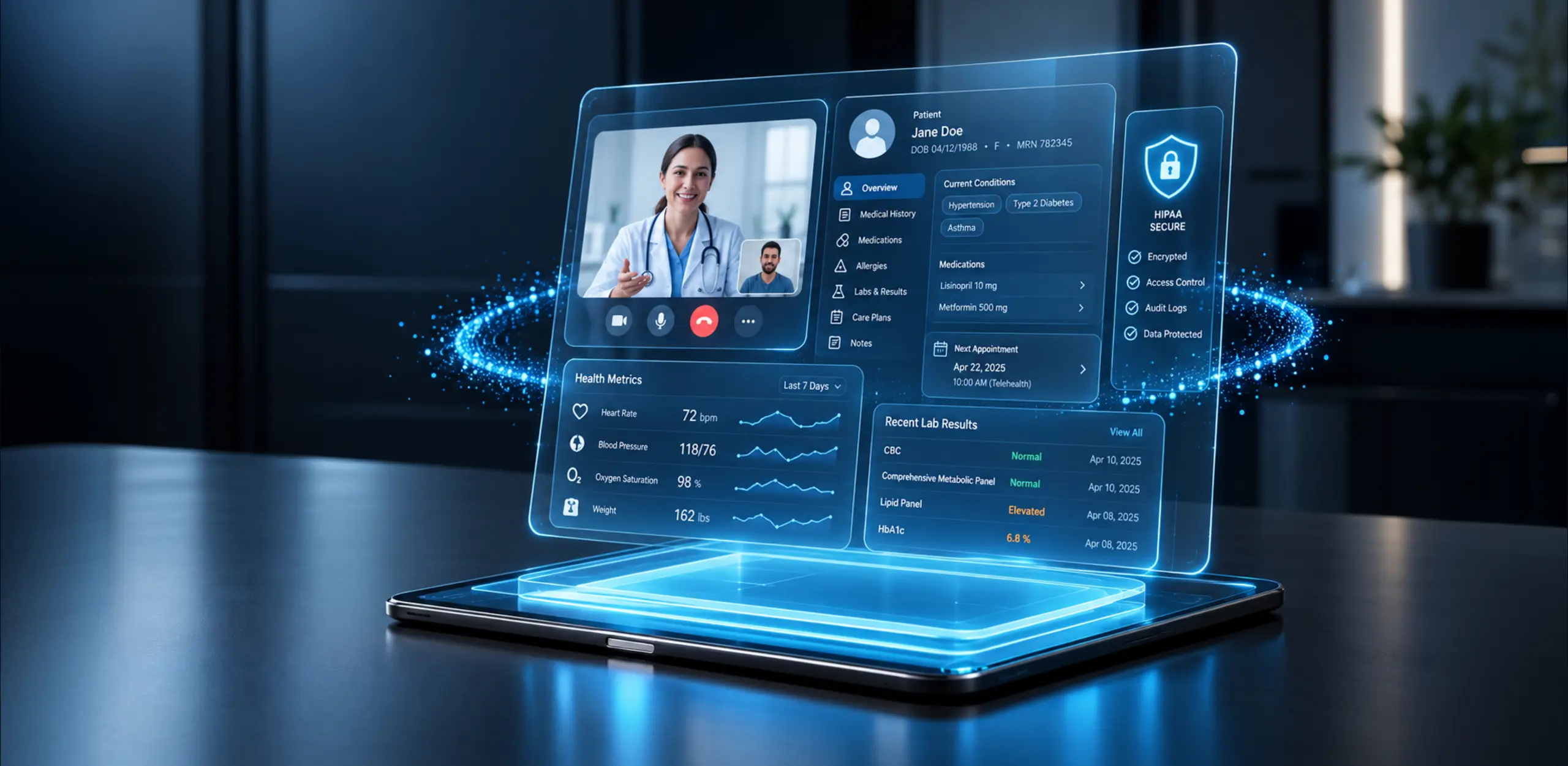
Healthcare avatars can help with appointment preparation, service navigation, general patient education, and portal guidance. These use cases need tight boundaries, reviewed content, consent, and human escalation. A careful answer is better than a confident wrong one.
Retail, Events, and Enterprise Support
In retail, avatars can guide product discovery and comparisons. At events, they can answer schedule and booth questions. Inside enterprises, they can make HR, IT, policy, and onboarding information easier to access. Enfin’s AI virtual assistant case study around HP’s event engagement is a strong proof point for this type of guided digital interaction.
Security, Compliance, and Trust Considerations
AI avatars interact directly with customers, employees, learners, or patients. That makes trust a product requirement, not a legal footnote. A serious build should consider risk before launch, not after the first bad answer.
The NIST AI Risk Management Framework is useful because it encourages teams to bring trustworthiness into the design, development, use, and evaluation of AI systems. For avatar projects, this translates into practical controls: approved data sources, transparent AI disclosure, user consent, human escalation, auditability, and continuous monitoring.
Security should also address LLM-specific risks. The OWASP Top 10 for Large Language Model Applications highlights risks such as prompt injection and insecure output handling. These are not abstract concerns. If an avatar can access tools, documents, or user data, the system needs input validation, permission controls, output checks, and careful logging.
- Use approved knowledge sources and review workflows for sensitive content.
- Set clear rules for when the avatar must refuse, clarify, or hand off.
- Collect only the data needed for the task.
- Monitor failed answers and risky patterns after launch.
- Make it clear when users are interacting with AI.
Cost Factors in Custom AI Avatar Development
There is no useful fixed price for custom AI avatar development because scope changes the cost dramatically. A simple website guide is very different from a multilingual, voice-enabled enterprise avatar that integrates with CRM, support, authentication, analytics, and compliance workflows.
The biggest cost drivers are the number of user journeys, avatar quality, realtime voice requirements, knowledge-base complexity, integrations, security controls, analytics, admin tools, cloud infrastructure, and post-launch optimisation.
This is why discovery matters. A focused MVP can validate whether users engage with the avatar, whether the answers are accurate, whether latency is acceptable, and whether the business outcome is worth scaling. McKinsey’s 2025 AI research also points to a wider truth: adoption alone is not enough; organisations need operating-model changes and risk controls to capture value from AI.
Not sure where to start? Define one journey, one user group, one knowledge source, and one success metric. Enfin can help turn that into an MVP roadmap. Speak with Enfin
How to Choose the Right AI Avatar Development Company
The wrong partner will sell the face first and figure out the product later. The right partner will ask uncomfortable but useful questions: What problem are we solving? What should the avatar never say? Which systems must it connect to? Who approves the knowledge base? How will we measure success?
Before choosing a vendor, ask whether the team understands AI engineering, product design, application development, realtime communication, integrations, security, and post-launch optimisation. An avatar project touches all of these areas. Weakness in any one of them can reduce the value of the whole experience.
- Can they explain the difference between a demo, MVP, and production system?
- Can they connect the avatar to existing business workflows without overcomplicating phase one?
- Do they design for governance, escalation, and data protection?
- Can they provide analytics so the business knows what is working?
- Do they have relevant experience in AI, avatars, virtual assistants, or enterprise software?
The answer should sound practical, not magical. A strong partner will be honest about what AI can do well, what needs human oversight, and which use cases should wait until the foundation is stronger.
Why Enfin Technologies for AI Avatar Development Services
Enfin Technologies brings this work into a wider product engineering context. The company combines custom software development, AI engineering, real-time communication, and enterprise integration experience, which is exactly the mix an avatar project needs when it moves beyond a prototype.
Enfin’s credibility is not built on AI buzzwords alone. The company has 17+ years of engineering practice, 440+ projects delivered, 100+ enterprise and growth-stage clients, and 222+ pre-built modules that can accelerate product delivery. Those numbers matter because AI avatar projects need dependable execution, not just creative experimentation.
The connection to Enfin’s existing AI Virtual Avatar work and the HP virtual assistant success story gives the article a stronger E-E-A-T foundation. It shows that this is not only a theoretical service page. Enfin has already worked with interactive AI avatar experiences in business environments where engagement, product information, and user guidance matter.
For businesses exploring AI digital humans, Enfin can support the full path: use-case discovery, MVP scoping, avatar experience design, LLM and RAG integration, voice and realtime architecture, secure backend development, enterprise integration, analytics, and continuous improvement.
Build your first AI avatar MVP with Enfin. Validate one meaningful customer or employee journey before scaling the experience across channels. Book a consultation
Final Thoughts: Start With the Journey, Not the Avatar
AI avatars are becoming a serious business interface, but the winning projects will not be the ones with the most realistic face. They will be the ones that solve a clear problem, speak with the right tone, answer from trusted knowledge, connect to useful workflows, and know when to bring in a human.
That is the mindset businesses should bring to an AI avatar project. Do not begin with “Can we build a digital human?” Begin with “Which moment in our customer or employee journey needs better guidance?” Once that answer is clear, the technology choices become easier and the investment becomes easier to justify.
The right AI avatar development company helps you move from curiosity to clarity, from demo to deployment, and from a talking character to a digital human experience that earns trust every time someone uses it.
Let’s transform your business for a change that matters!
F. A. Q.
Do you have additional questions?
What does an AI avatar development company do?
It builds interactive digital humans that combine AI, voice, avatar design, software engineering, integrations, security, and analytics for real business journeys.
How much does custom AI avatar development cost?
Cost depends on use-case complexity, avatar quality, voice requirements, integrations, security controls, analytics, and whether the project starts as an MVP or a full platform.
Is AI avatar app development different from chatbot development?
Yes. A chatbot is usually text-led, while an AI avatar adds voice, visual presence, guided interaction, personality, and often richer application workflows.
Can AI digital humans connect with business systems?
Yes. With the right architecture, AI digital humans can connect with CRMs, help desks, LMS platforms, ecommerce systems, calendars, databases, and internal knowledge tools.
Why choose custom AI avatar development instead of a template tool?
Template tools are useful for quick content, but custom development is better when the avatar needs brand control, workflows, integrations, data governance, and long-term scalability.
Can an AI avatar be trained on our company’s own data?
Yes. A custom AI avatar can be connected to approved company data such as FAQs, product documents, policy files, training materials, CRM records, or knowledge bases so it answers from trusted business information.
Can AI digital humans support multiple languages?
Yes. AI digital humans can support multilingual conversations using speech recognition, translation, and text-to-speech technologies, making them useful for global customer support, education, healthcare, and enterprise service teams.
Is an AI avatar suitable for customer support automation?
Yes. An AI avatar can handle common support queries, guide users through basic troubleshooting, collect issue details, create tickets, and escalate complex cases to human agents when needed.
What makes an AI avatar different from a normal chatbot?
A chatbot usually interacts through text, while an AI avatar adds voice, facial expression, visual presence, and guided conversation, creating a more human-like digital interaction.
Can AI avatars be integrated into websites and mobile apps?
Yes. AI avatars can be embedded into websites, mobile apps, kiosks, LMS platforms, telehealth portals, ecommerce platforms, and enterprise systems depending on the business use case.