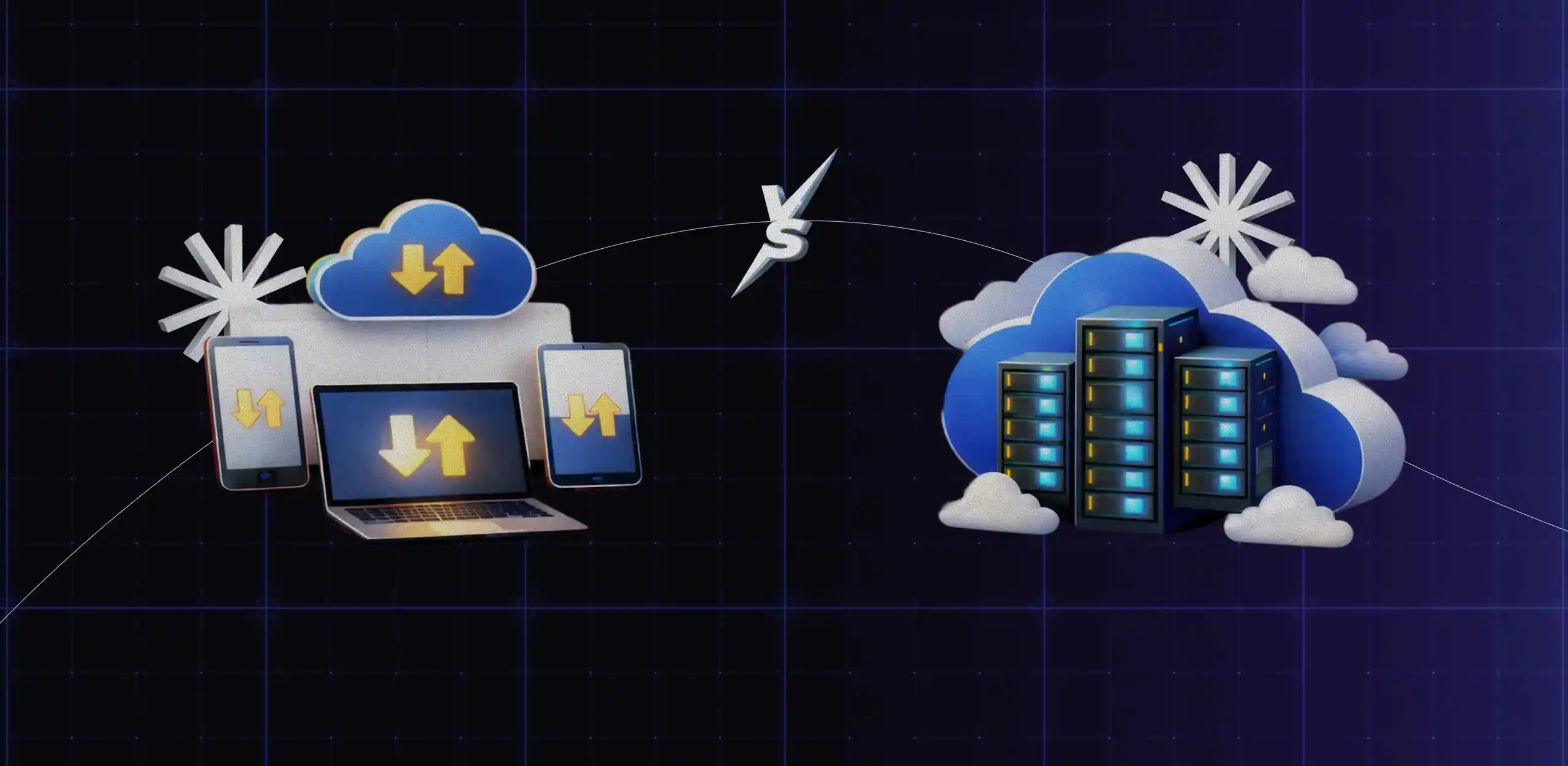
AWS Development Company professionals often face a critical architectural decision: whether to adopt serverless architecture on AWS or opt for containerized applications on AWS. As businesses scale and embrace complex cloud workloads, this decision becomes a strategic differentiator. In this blog, we’ll explore how an AWS development company evaluates and decides between three key compute options—AWS Lambda, AWS Fargate, and Amazon EKS—as part of their AWS cloud development services, analyze the trade-offs between serverless vs containers, and illustrate decision frameworks grounded in real-world experience.
Why the Choice Matters
When an AWS development company designs cloud-native solutions, the compute layer isn’t just a technical detail, it drives cost, scalability, maintenance overhead, and time-to-market. A function-based model like Lambda can deliver ultra-fast deployment and pay-as-you-go billing. On the other hand, containers (via Fargate/EKS) enable full control, complex orchestration, and enterprise grade infrastructure. Understanding the differences and aligning them with your business goals—is fundamental.
In our journey to deliver robust offshore software development services, we’ve helped clients transition from traditional servers to modern cloud platforms. In doing so, we constantly ask: “Serverless vs containers – which model provides better value for this workload?” Unlocking that answer demands a structured approach.
Serverless vs Containers-Understanding the Core Difference
Serverless architecture on AWS refers to compute models where infrastructure management is abstracted away from the developer. With AWS Lambda, for instance, you deploy functions triggered by events, and the platform handles scaling, patching, and resource allocation.
AWS Documentation. In contrast, containerized applications on AWS wrap software in container images and deploy them via ECS/EKS/Fargate. With containers, you control runtime, dependencies, and orchestration—enabling complex applications and microservices ecosystems.
Here are key operational differences:
- Infrastructure responsibility: Serverless hides infrastructure; containerized apps expose it. Lambda removes VM management. Fargate still needs container packaging and some orchestration.
- Scaling model: Lambda scales automatically per invocation, often down to zero. Containers scale per task or pod. Fargate/EKS require more planning.
- Billing model: Serverless is billed per request/time. Containers billed for capacity (vCPU/Memory) even if idle.
- Use-case suitability: Event-driven, short-lived tasks → Lambda. Long-running, persistent services → containers.
For an AWS development company delivering AWS cloud development services, choosing between serverless and containers often comes down to workload characteristics, team skills, future growth, and cost model. The right choice becomes a strategic lever.
Ready to bring your digital vision to life? Talk to our experts today!
AWS Lambda — The Power of Serverless Simplicity
Lambda is the canonical example of serverless compute in AWS. You upload your code or container image, define triggers (HTTP requests, S3 uploads, scheduled events), and the platform runs your functions in a highly available compute environment. You’re billed only for actual execution time and memory allocated.
Benefits of Lambda:
- Minimal operational overhead: As one AWS decision guide states, both Lambda and Fargate abstract away server management, letting developers focus on code.
- Very fast time-to-market: New features can be deployed in minutes.
- Cost efficiency for spiky or unpredictable workloads: You pay only for invocation and execution time.
- Seamless event-integration: Works with S3, DynamoDB, EventBridge, etc.
Limitations to keep in mind:
- Execution timeout limits (15 minutes) make Lambda unsuitable for long-running processes.
- Cold start latency can affect performance for infrequently invoked functions.
- Less runtime control: You can’t fine-tune the underlying infrastructure.
- Container support is limited compared to full ECS/EKS environments.
Use-cases where we pick Lambda:
For an AWS development company working on AWS cloud development services with microservices that listen to HTTP endpoints, respond to events, or perform lightweight processing—Lambda often wins for simplicity, speed, and cost. Examples: image processing, webhook handlers, IoT event ingestion.
AWS Fargate — The Best of Both Worlds
For teams that want containerization, yet don’t want to manage servers or clusters outright, Fargate offers a compelling middle ground. It allows you to run containers with ECS or EKS without provisioning or maintaining EC2 instances
Advantages:
- Container flexibility: You control dependencies and runtime environment, but AWS handles infrastructure overhead.
- Longer-running, stateful or microservice-style workloads: Unlike Lambda, tasks can run indefinitely, making Fargate suitable for services, APIs, or background jobs.
- Easier container migration: Many teams with existing Docker images can migrate to Fargate with minimal changes.
Trade-offs:
- While infrastructure is abstracted, you still need to define task specs, CPU/memory, networking, IAM etc. More complex than pure Lambda.
- Cost may be higher than Lambda for certain workloads, especially if containers remain idle.
- Cold start and scaling delays can exist, though Fargate has improved significantly.
When an AWS development company chooses Fargate:
For clients building containerized microservices with moderate to high runtime, needing control over environment, but not wishing to manage Kubernetes clusters directly—Fargate is often the preferred choice. It blends containerization and serverless operations under one umbrella.
Contact our AWS team to design a hybrid architecture tailored to your goals
Amazon EKS — Full Control for Enterprise-Grade Containerization
When you require orchestrated microservices, multi-region deployment, complex networking, hybrid-cloud support or full Kubernetes functionality, Amazon EKS (Elastic Kubernetes Service) becomes the go-to for an AWS development company. EKS is containerized in nature, providing full orchestration, dozens of nodes, multi-pod configuration, sophisticated scheduling, and integration with Kubernetes ecosystem.
Why use EKS:
- Full Kubernetes feature set: DaemonSets, StatefulSets, custom controllers.
- Fine-grained control over networking, storage, security policies, multi-cluster.
- Suitable for large-scale enterprise microservices landscapes.
Challenges:
- Management overhead: While AWS manages the control plane, you’re still responsible for nodes, upgrades, security patches.
- Learning curve: Kubernetes expertise required.
- Cost and complexity: More upfront planning and resources.
Preferred by an AWS development company when:
You’re building large container-based applications, microservice ecosystems with high complexity, or hybrid/edge deployments.You need full visibility, custom orchestration, multi-cluster resilience.
Comparative Analysis — Lambda vs Fargate vs EKS
Feature | AWS Lambda | AWS Fargate | Amazon EKS |
Deployment Model | Function (FaaS) | Container (serverless CaaS) | Kubernetes cluster (CaaS) |
Infrastructure Management | None | Minimal | Significant |
Scaling | Auto per event | Auto per task | Auto if configured |
Best For | Event-driven micro-tasks | Containerized services | Large microservices, orchestration |
Execution Duration | Up to 15 mins | Unlimited | Unlimited |
Control & Customization | Low | Moderate | High |
In one recognized guide, both Lambda and Fargate are described as “serverless” compute, but their architecture and scaling differ significantly.The comparison shows how an AWS development company weighs trade-offs.
How an AWS Development Company Chooses the Right Approach
An AWS development company doesn’t rely on guesswork when deciding between serverless vs containers — the decision is grounded in analysis, architecture alignment, and scalability forecasting. Each project is unique, and AWS offers multiple compute models (Lambda, Fargate, and EKS) that can address different business needs. The right approach depends on several factors that ensure performance, cost-efficiency, and long-term adaptability within your AWS cloud development services strategy.
Workload Nature and Duration
If the workload is short-lived, event-driven, and highly elastic, AWS Lambda is the best option. For microservices that need persistent connections or longer execution times, AWS Fargate is ideal. Meanwhile, Amazon EKS suits enterprises running complex, containerized microservice ecosystems that require deep orchestration and Kubernetes-level control.
Cost Optimization and Scaling Requirements
For startups or fast-growing companies, cost is often the biggest factor. Lambda’s “pay per invocation” model works wonders for unpredictable workloads. However, for applications with steady traffic, container-based options like Fargate or EKS often become more economical in the long run. An experienced AWS development company will evaluate your average utilization, scaling trends, and business cycles before locking into one model — ensuring that you only pay for what you truly need.
Level of Control and Compliance
Serverless environments such as Lambda offer convenience but less customization. Containers and Kubernetes (EKS) give you full control over the runtime, dependencies, and networking, which can be crucial for industries that demand compliance, auditability, and custom configurations. For enterprises in healthcare, finance, or government sectors, containerized applications on AWS often strike the best balance between flexibility and compliance.
Team Expertise and Operational Complexity
If your team isn’t well-versed in managing Kubernetes clusters, starting with AWS Lambda or AWS Fargate can drastically reduce DevOps overhead. But for teams with mature CI/CD pipelines and Kubernetes experience, Amazon EKS offers long-term flexibility and infrastructure as code capabilities — a key differentiator in enterprise-grade AWS cloud development services.
Future Scalability and Architectural Vision
An AWS development company always thinks beyond current requirements. If the roadmap includes expanding into multi-region deployments, edge computing, or hybrid-cloud integration, EKS or Fargate might be more sustainable. Conversely, if your focus is on quick deployment, MVP launches, or automation-heavy workflows, Lambda provides unmatched simplicity and speed.
Real-World Example; Hybrid AWS Architecture in Action
Let’s consider a global e-learning startup that approached an AWS development company to modernize their infrastructure. They needed to handle millions of video interactions, real-time analytics, and scheduled notifications — all with cost efficiency in mind.
The solution combined AWS Lambda, Fargate, and EKS into a hybrid model.
AWS Lambda handled real-time triggers such as sending course completion emails or processing image uploads where functions ran for just a few seconds per event.
AWS Fargate managed the core web application, including user sessions and authentication microservices. It provided control over dependencies without the burden of managing EC2 instances.
Amazon EKS powered the analytics engine and machine learning components, orchestrating large-scale workloads that needed GPU acceleration and long processing cycles.
This hybrid architecture leveraged the strengths of both serverless architecture on AWS and containerized applications on AWS, improving scalability by 40% and reducing infrastructure costs by 25%. It demonstrated how an AWS development company can combine multiple compute models to deliver optimal business outcomes ; balancing speed, flexibility, and control.
Talk to our certified AWS professionals to design your own hybrid cloud strategy.
Pros and Cons: Making the Right Decision
When comparing AWS Lambda vs Fargate vs EKS, it’s not about which is “better”, it’s about which aligns with your application’s purpose.
AWS Lambda (Serverless)
- Pros: No server management, instant scalability, pay-per-use model, excellent for unpredictable traffic.
- Cons: Limited execution time, less control, not suitable for complex containerized workloads.
- Ideal For: Startups, automation workflows, event-driven applications, and lightweight microservices.
AWS Fargate (Managed Containers)
- Pros: Full container flexibility, no EC2 management, strong integration with ECS/EKS.
- Cons: Slightly higher cost for idle containers, limited Kubernetes feature depth.
- Ideal For: APIs, web apps, and microservices that need predictable runtime environments.
Amazon EKS (Full Kubernetes Control)
- Pros: Enterprise-grade orchestration, fine-grained control, multi-environment scalability.
- Cons: Higher operational complexity, requires Kubernetes expertise.
- Ideal For: Large-scale, multi-service systems and DevOps-driven enterprises.
An experienced AWS development company like Enfin Technologies helps clients map these pros and cons to their business realities — ensuring that the chosen architecture supports both current needs and future growth.
The Future of Cloud-Native Development ; Blending Serverless and Containers
The future of AWS cloud development services lies in convergence, not competition. It’s no longer “serverless vs containers”; it’s “serverless and containers.” AWS continues to blur the line between these models — allowing developers to run container images on Lambda and enabling Fargate to function with Kubernetes workloads seamlessly.
For example, an organization may use Lambda for event-driven automation (like triggering batch jobs) while running the actual heavy processing on Fargate or EKS. This hybrid approach offers the elasticity of serverless with the stability and control of containers. It’s how modern AWS development companies build scalable, cost-optimized architectures for diverse workloads.
As cloud adoption deepens, businesses will increasingly adopt architectures that combine multiple compute services. The choice will no longer be binary, it will depend on orchestration, integration, and long-term sustainability. Embracing this flexible mindset is key for enterprises aiming to maximize ROI from their AWS cloud development services.
Partner with the Right AWS Development Company
Choosing between AWS Lambda, AWS Fargate, and Amazon EKS isn’t just a technical decision, it’s a strategic one. The right AWS development company helps you align your business goals with the most efficient cloud infrastructure, ensuring your applications are secure, scalable, and cost-effective.
A skilled team of AWS-certified engineers can design end-to-end solutions — from building serverless architecture on AWS to deploying containerized applications on AWS — that match your workload needs and future growth plans. They evaluate performance demands, optimize cloud spending, and implement architectures that are resilient, high-performing, and easy to scale.
Whether you’re launching your first cloud-native product or transforming existing systems, partnering with an experienced AWS development company ensures your AWS cloud development services deliver maximum value. With the right expertise and strategic guidance, your journey to the cloud becomes faster, smarter, and built for long-term success.
Conclusion
When it comes to serverless vs containers, there’s no one-size-fits-all solution. Every architecture has its strengths, and the real power lies in knowing when and how to use each. The best AWS development company doesn’t just follow trends it architects solutions that evolve with technology and scale with ambition.
Whether you’re drawn to the event-driven simplicity of AWS Lambda, the managed flexibility of AWS Fargate, or the enterprise control of Amazon EKS, the right decision depends on your vision, team, and business objectives. By blending these technologies strategically, businesses can create resilient, high-performing, and future-ready offshore software solutions powered by AWS.
Let’s transform your business for a change that matters!
F. A. Q.
Do you have additional questions?
What is AWS in a company?
It is a comprehensive cloud platform that provides businesses and individuals with IT services like storage, servers, and databases over the internet, allowing them to scale and innovate without needing to buy and maintain their own physical infrastructure. AWS is the world’s largest cloud provider, used by millions of customers to lower costs, increase agility, and innovate faster.
When to choose Lambda vs Fargate?
The nature of your applications: If you have long-running applications or those that require complex data processing, Fargate would be a more suitable choice. On the other hand, if your applications are event-driven and have short execution times, Lambda would be a better fit.
What is the difference between serverless and container?
In a container-based architecture, the number of containers deployed is determined by the developer in advance. In contrast, in a serverless architecture, the backend inherently and automatically scales to meet demand.
When should an AWS development company choose AWS Lambda?
An AWS development company would choose AWS Lambda when the workload is event-driven, short-lived, and scales unpredictably. In these cases, AWS cloud development services leveraging serverless architecture on AWS allow minimal operations overhead, fast deployment, and cost efficiency since you’re billed only when functions execute.
What are the main performance trade-offs between Lambda, Fargate and EKS?
For containerized applications on AWS, an AWS development company will favour AWS Fargate or Amazon EKS when workloads are long-running, require full container control or orchestration, microservices span multiple pods, or you need hybrid cloud/multi-cluster support. In these scenarios, AWS Lambda vs Fargate vs EKS analysis shows containers offer more customization and control, though at higher operational complexity.
What is the difference between AWS Lambda and ECS container?
Amazon ECS is a container orchestrator whereas AWS Lambda is a function deployment. Amazon ECS is ideal if you have tasks running longer than 15 minutes or need to run code outside of AWS Regions.
In which scenarios should containers (Fargate/EKS) be preferred over serverless functions?
For containerized applications on AWS, an AWS development company opts for AWS Fargate or Amazon EKS when workloads require persistent runtime, complex orchestration, microservices that span pods, or hybrid‐cloud deployments — enabling greater control, customisation, and scalability.
What is the operational overhead of serverless vs containers?
An AWS development company compares operational overhead: serverless architecture on AWS (Lambda) offers minimal ops (no servers to manage), whereas containerized applications on AWS (Fargate/EKS) require container image management, orchestration, cluster upgrades and monitoring — so the overhead increases accordingly.
How does an AWS development company future-proof the architecture choice between Lambda, Fargate and EKS?
To future-proof AWS cloud development services, an AWS development company will design with scalability, portability and workload evolution in mind — starting with serverless architecture on AWS for rapid launches, then leveraging containerized applications on AWS as complexity grows, ensuring architecture aligns with long-term strategy.